Asociacion Servicios Educativos Rurales - SER
SER works from rural areas to strengthen historically marginalized populations in their integral development.
SER works from rural areas to strengthen historically marginalized populations in their integral development.
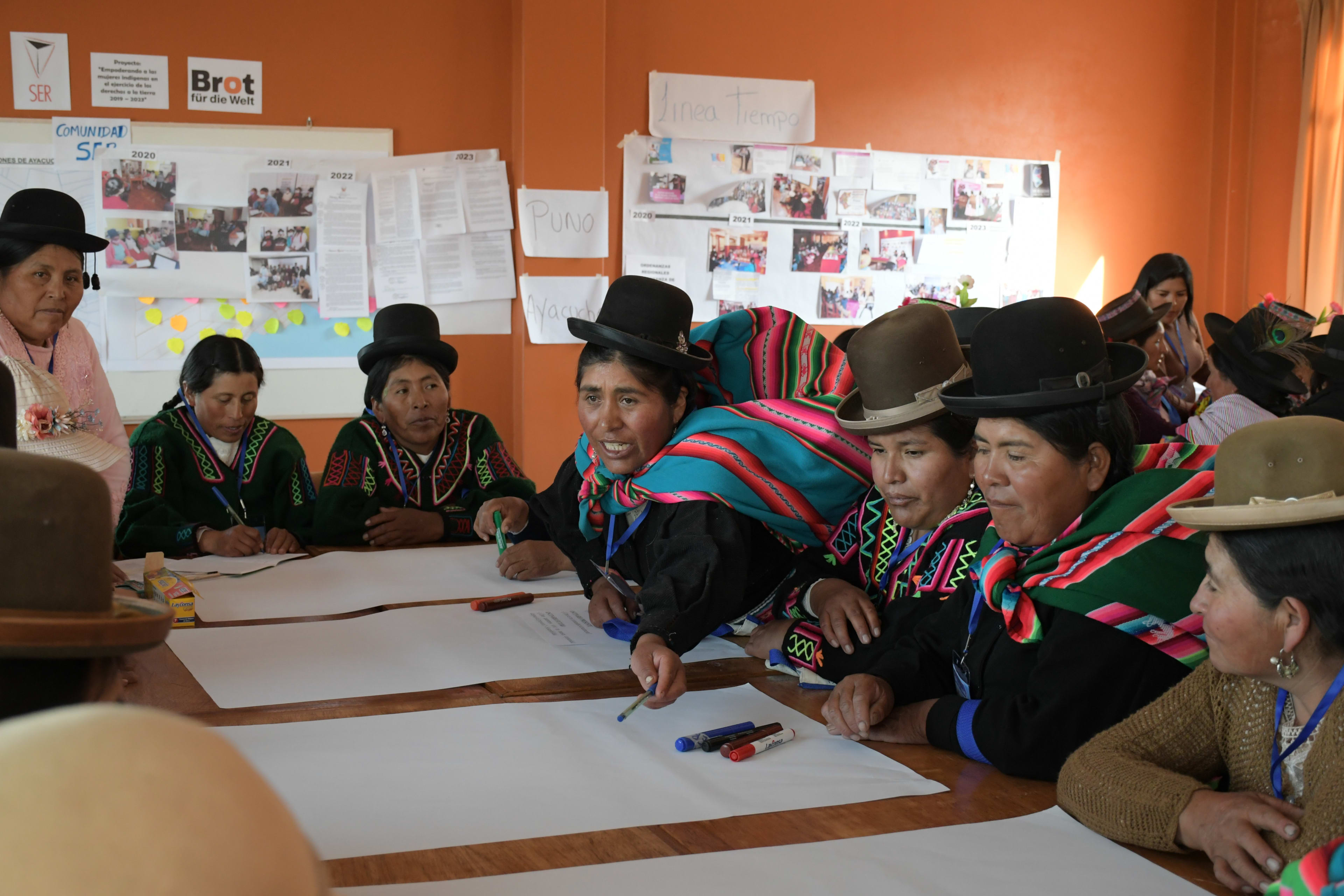
SER has been working in Peru since 1980, primarily in rural areas and with leaders and representative organizations of the most vulnerable populations. For the past 20 years, it has focused its efforts on the regions of Ayacucho, Cajamarca, Huancavelica, and Puno, with the following areas of focus: ensuring the right to water and sanitation for rural populations, improving public water policies, and reducing vulnerability to water scarcity. It also works to strengthen territorial governance processes, local institutions, and improve the exercise of rights for rural populations, especially Indigenous communities, women, and youth. Finally, it promotes the right to access diverse information that addresses the need for explanation and interpretation of the regional political context and the conflicts involving various actors.
SER's mission is to become a nationwide institution that promotes comprehensive development, gender equality, and intercultural citizenship. It works at the local level to strengthen democratic governance, respect for human rights, and environmental sustainability with historically excluded populations and their organizations through capacity building, the preservation of ancestral knowledge, and technological innovation.
Its vision is that by 2030, it aims to be a leading institution in social development, contributing to the construction of an inclusive and just society where the rights of all people and nature are guaranteed.
To this end, SER has defined the values that guide its work: Transparency, Solidarity, Justice, and Equality. Furthermore, SER considers the following approaches to its work: Human Rights, Gender, Interculturality, Territorial Development, and Good Living (Allin Kausay / Kametsa Asaike / Suma qamaña).
For its work with the rural population, SER has defined the following programmatic axes to focus its actions: 1. Water and climate change, 2. Gender equality and women's empowerment, 3. Citizenship, rights, and territorial governance, and 4. Strengthening and modernizing institutional management.
To carry out our activities, we are organized into three programs: The Democratic Governance and Decentralization Program (PGDD) is aimed at promoting greater citizen participation in various decision-making processes, with a special emphasis on the full exercise of political rights, strengthening local institutions, and creating public spaces. The Water and Sanitation Program aims to help rural and peri-urban populations gain access to sustainable drinking water and sanitation services. The Institutional Positioning Program aims to increase the visibility of our work on social issues within society, the government, and international cooperation agencies, as well as contribute to efficient institutional management.
SER is oriented towards a more coordinated territorial presence, based on approved programs and projects currently underway. This institutional intervention in each region allows teams to contribute to regional development by integrating their diverse programmatic approaches and areas of expertise. To this end, it has regional offices in Cajamarca, Ayacucho, and Puno.
As a result of this work, we have achieved access to water and sanitation for 250,000 people from 50,000 families in 600 rural communities in the Andean region; the participation of 2,712 indigenous women from 38 peasant communities in their communities' decision-making spaces in Puno and Ayacucho; 4 regional agendas with proposals from civil society in Ayacucho, Cajamarca, Junín, and Puno, resulting from dialogue and agreement processes on platforms of local and regional citizen organizations; 420 civil society leaders participating in dialogue and listening processes in Cajamarca, Junín, Ayacucho, and Puno, giving voice to organizations of farmers, women, youth, peasant and indigenous communities, SMEs, markets, transporters, neighborhoods, families of victims of violence, cultural groups, universities, workers' and professional associations, LGBTQI+ people, and people with disabilities; and 2 Listening Encounters – in Ayacucho and Puno – on the country's crisis and their proposals with the participation of 300 leaders of organizations from provinces and regions.



Donate or start a fundraiser