Farmer Tantoh Foundation
Farmer Tantoh Foundation is a 501(c)3 that supports the humanitarian projects of environmentalist Dieudonne Tantoh Nforba.
Farmer Tantoh Foundation is a 501(c)3 that supports the humanitarian projects of environmentalist Dieudonne Tantoh Nforba.
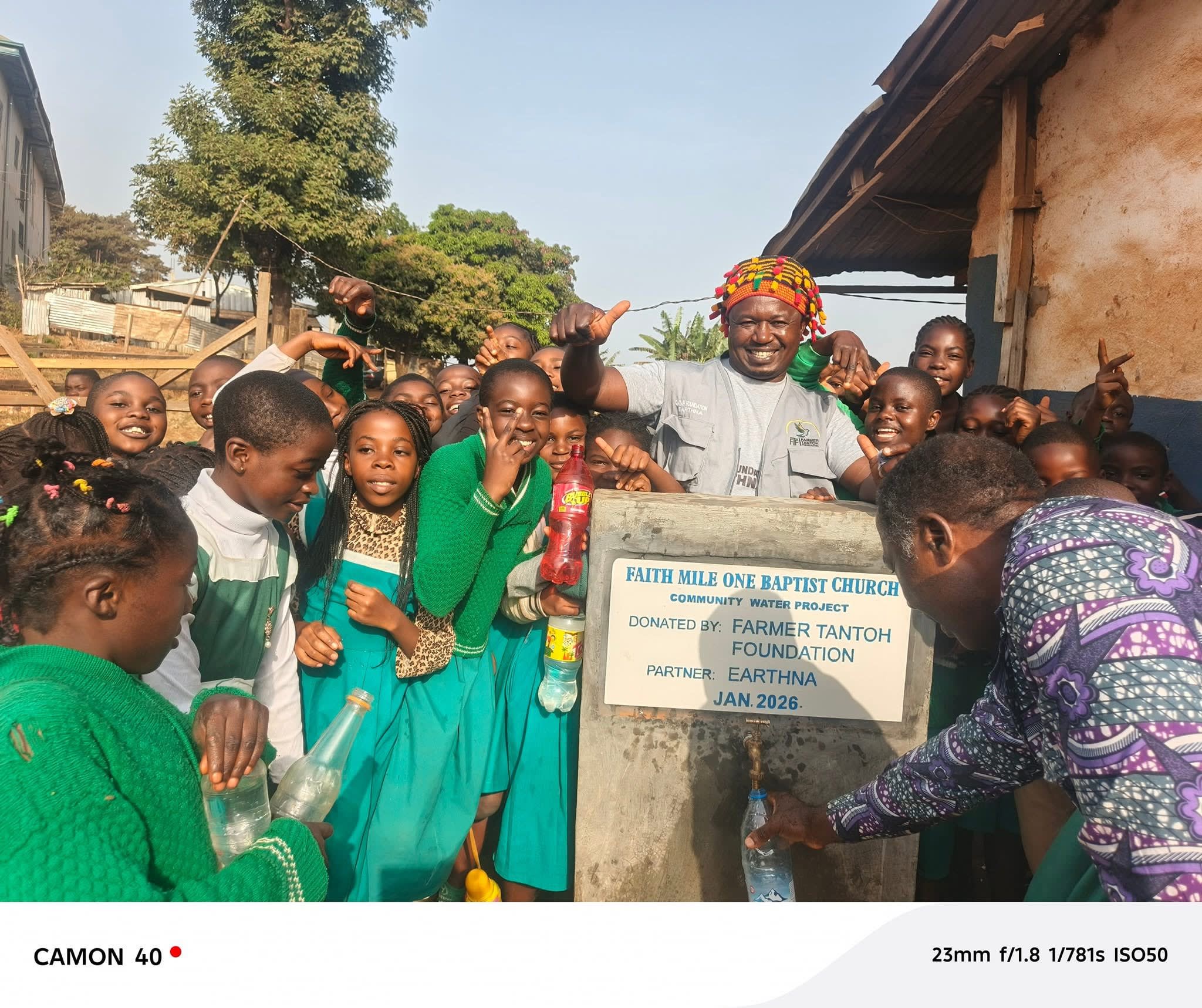
Dieudionne Tantoh Nforba has devoted 30 years of his life to a simple but transformative mission: ensuring rural communities in Cameroon have safe water and the knowledge and capacity to protect it for generations to come. His commitment began with a deeply personal experience. In 2002, he contracted typhoid from contaminated drinking water and suffered for seven years. Rather than allowing this experience to define him, he turned it into a lifelong commitment to prevent others from suffering because of unsafe water.
Since then, Tantoh has overseen and facilitated more than 100 water projects across Cameroon, benefiting over 250,000 people. These projects include protected springs, wells, water tanks, filtration systems, rainwater harvesting, and recharge facilities.
His impact is substantial. His movement has planted more than 100,000 water-friendly trees and established recharge facilities that help replenish aquifers, reduce erosion, stabilize water tables, and protect water catchments. He also helped establish over 1,000 gardens and trained more than 500 volunteers in sustainable agriculture, water conservation, and environmental stewardship.
What distinguishes Tantoh is his community-centered and highly replicable approach. He combines indigenous knowledge with low-cost techniques that require little or no specialized equipment. Communities participate in planning, construction, and maintenance, while local water management committees help ensure that projects remain sustainable. Tantoh equips communities with the knowledge, skills, and ownership needed to manage their own water resources.
Cameroon’s English-speaking Northwest region has endured more than a decade of political conflict and violence. Despite the risk of kidnapping and encounters with armed groups, Tantoh continues to travel into rural communities to carry out water and environmental projects. His determination to serve communities in areas others may be unwilling to reach reflects exceptional courage, resilience, and commitment.
His influence extends well beyond Cameroon. He has been invited to more than 20 countries to share his knowledge. Most recently, he traveled to Bungoma County in Western Kenya to train the trainers on water conservation techniques. His story is featured in the children’s book “I Am Farmer: Growing an Environmental Movement in Cameroon”, used in elementary schools across the United States. In 2019, he shared his story with more than 30,000 students in 40 schools across ten U.S. states, inspiring young people to understand the connection between water, environmental protection, and community action.
In April 2025, Tantoh was selected as one of the inaugural recipients of the Earthna Prize from the Qatar Foundation. The international award recognized his use of traditional knowledge in water resource management and provided $250,000 to expand his work.
Most importantly, Tantoh has developed a model that can be replicated. Through his “New Village Environmental Movement”, he is training fellows to lead grassroots environmental initiatives, with a goal of developing 100 fellows by 2030. He is also establishing an Eco-Village Training Center where people from Cameroon and around the world can learn sustainable approaches to agriculture and water resource management.
His transition from hands-on project leader to trainer and mentor will multiply his impact across Cameroon and internationally, making a significant contribution to the sustainable, and equitable management of the world’s water resources. His extraordinary record of service, courage, innovation, and growing international influence makes him an outstanding candidate for the Stockholm Water Prize. You can read his full resume at https://tinyurl.com/Tantohnforba
Access to clean water is a fundamental human right!