Center for Indonesia's Strategic Development Initiatives (CISDI)
CISDI advances Indonesia’s health sector through research, advocacy & community-driven interventions for a just & healthy society.
CISDI advances Indonesia’s health sector through research, advocacy & community-driven interventions for a just & healthy society.
HISTORY
The Center for Indonesia's Strategic Development Initiatives (CISDI) was established in 2014 through the Pencerah Nusantara program, an initiative program to strengthen primary health services in Indonesia. Diah Saminarsih, founder of CISDI, initiated the Pencerah Nusantara program in 2011 while serving as Deputy Special Envoy for the President of the Republic of Indonesia for the Millennium Development Goals. Pencerah Nusantara was developed to be a multidisciplinary collaboration-based movement to strengthen access to primary health care in Indonesia.
Pencerah Nusantara's journey in strengthening primary health services has always been on a good track since it was founded. In 2015, Pencerah Nusantara was adopted and expanded at the national level by the Indonesian Ministry of Health through the Nusantara Sehat program.
While strengthening primary health services, CISDI also aims to reduce the complexity of health sector problems. This commitment is embodied in our concern for tobacco control and issues related to risky food consumption. Moreover, CISDI is developed to be a non-profit organization that accommodates various strategies, innovations, and collaborations to create an equal, empowered, and prosperous Indonesian society in a healthy paradigm.
VISION AND MISSIONS
Our vision is to build a healthy, equal, and just Indonesia. The following five key missions support our vision:
ACTIVITIES
1] Primary Health Care Strengthening
a. Pencerah Nusantara (PN) is an initiative run by CISDI since 2012, revitalising primary health care by sending young professionals to Puskesmas. With synergistic cross-sector collaboration, PN aims to improve public health by strengthening primary care through knowledge management, service improvement, and community empowerment. Over time, it evolved into a programme fostering community and multi-stakeholder engagement.
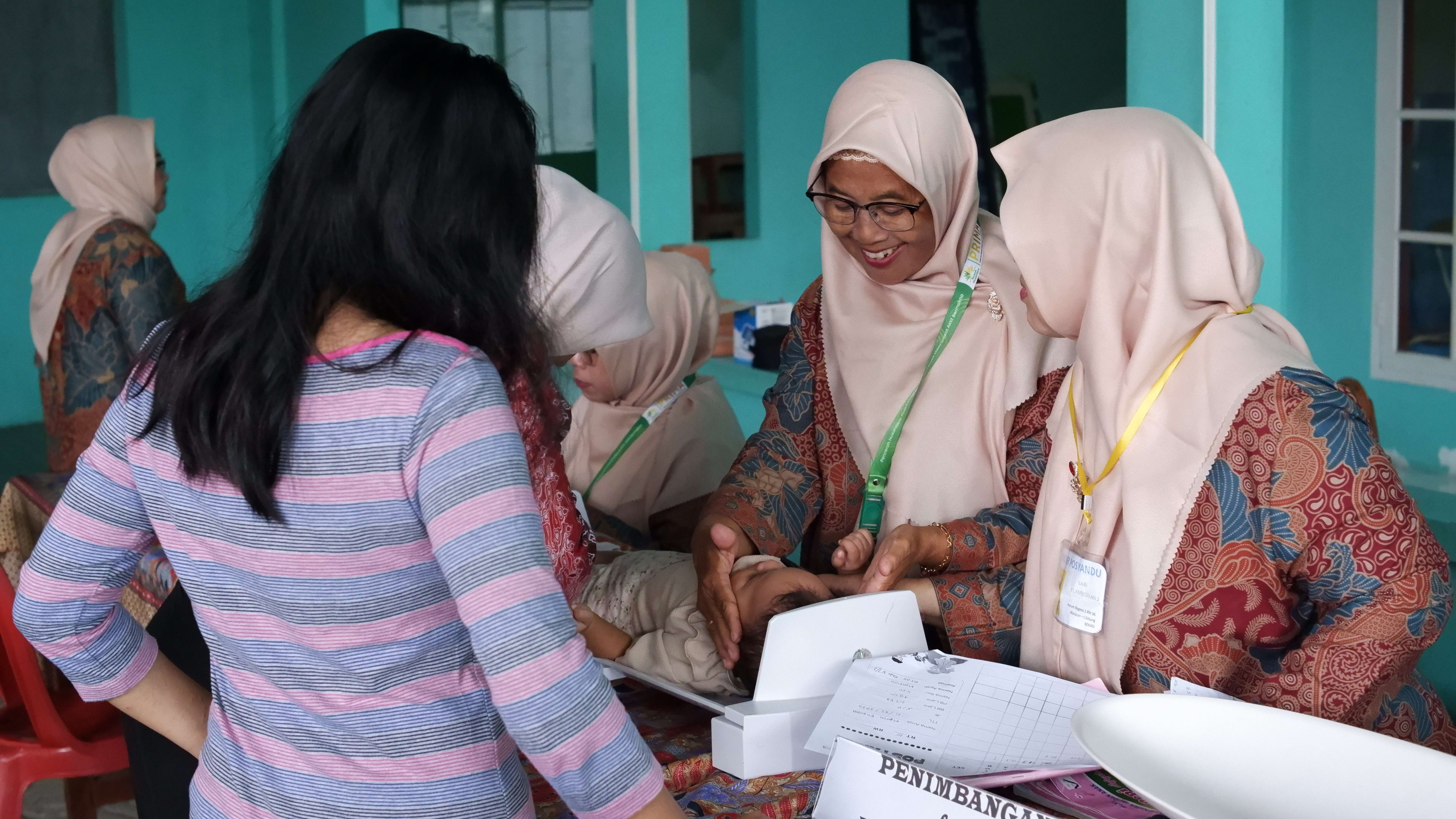
b. In 2021, CISDI developed the Responsive-Inclusive Health Centres and Active Communities (PN-PRIMA) programme, continuing the PN model to provide primary services responsive to community needs, reaching vulnerable groups inclusively in four areas: MCH, NCDs, Infant Nutrition Improvement, and Immunisation. Innovations include involving community health workers, training, mentoring, integration with private facilities, and supervisory support. PN-PRIMA operates in 12 Puskesmas in Depok and Bekasi, combining community-based approaches with digital technology.
c. Keluarga Berimun (Immune Families) is a PN-PRIMA campaign with the Ministry of Health and local health offices to support the Complete Basic Immunisation programme via social media and digital platforms, providing accurate information to build parents’ confidence in immunisation.
2] Strategic Planning for Health System Reform
Shaping a new future for the National Health System is essential. The pandemic reminded the need for robust planning. Current top-down approaches often miss ground realities, making reform a strategic issue for CISDI. We believe a fair, resilient system requires inclusive, evidence-based planning across sectors. CISDI contributes through research (Health Outlook, Foresight, White Paper) and participation in Global Public Investment.
3] Tobacco Control
Tobacco consumption is the top preventable cause of death, yet youth smoking in Indonesia is rising, risking NCDs. Since 2016, CISDI has worked on prevention education, tobacco tax advocacy, and smoking cessation programmes with the Ministry of Health. Indonesia has not ratified the FCTC, keeping tobacco affordable. We advocate for higher, simpler tobacco taxes—a proven way to reduce prevalence.
4] Healthy Diets
In 2021, 19.5 million Indonesians had diabetes, with treatment costs reaching 21.2 trillion rupiah. Indonesia ranks third in consumption of Packaged Sweetened Drinks (MBDK), a diabetes risk factor. CISDI addressed this via studies, policy advocacy, public campaigns, and awareness-raising through the Food Policy programme and Forum for Young Indonesians (FYI). FYI discusses development, social, and health issues, focusing on reducing sugar, salt, fat, and sugar-sweetened beverages (SSBs) consumption.
5] TRACK SDGs
Since 2019, CISDI’s TRACK SDGs has supported the Sustainable Development Goals by acting as a monitoring, information, and knowledge-sharing platform for non-state actors in Indonesia. It facilitates discussions, collaborations, and mapping of development actors to integrate goals and achieve the SDGs.



i support CHWs