Logo of Laboratory of Social Entrepreneurship

Laboratory of Social Entrepreneurship

We build and strengthen social organizations, so they become sustainable, cost-effective, and results-oriented.

DonateStart a fundraiser
User or nonprofit avatar
Poverty Alleviation
User or nonprofit avatar
Entrepreneurship
User or nonprofit avatar
Research
User or nonprofit avatar
Education
User or nonprofit avatar
Health
User or nonprofit avatar
Environment
User or nonprofit avatar
Animals

ENG: Laboratory of Social Entrepreneurship is a meta-organization that helps social actors become more sustainable, cost-effective, and results-oriented, while promoting a more human, strategic, and responsible use of resources.

Our flagship work is Theory of Change Makers (ToCM), Latin America’s first incubation program focused on evidence-based and cost-effective interventions. Through a structured cohort model, we support early-stage founders to:

  • Prioritize problems using the ITN framework (Importance, Tractability, Neglectedness),
  • Review the best available evidence on interventions,
  • Build a clear Theory of Change,
  • Develop a lean prototype and a cost-effectiveness model,
  • And prepare grant-ready materials to launch and implement.

Donations to the Laboratory of Social Entrepreneurship help us fund fellow support, research capacity, mentorship, measurement systems, and the operational backbone that allows new organizations to be built with rigor and accountability. At the center of our work is a simple belief: people facing injustices and animals facing exploitation deserve programs that are not only well-intentioned, but well-designed, so resources translate into real, measurable improvement.

ESP: El Laboratorio de Emprendimientos Sociales es una organización meta que apoya a actores sociales para que sean más sostenibles, costo-efectivos y orientados a resultados, mientras promueve un uso más humano, estratégico y responsable de los recursos.

Nuestro programa principal es Theory of Change Makers (ToCM), el primer programa de incubación en América Latina enfocado en intervenciones basadas en evidencia y costo-efectivas. A través de un modelo estructurado por cohortes, apoyamos a fundadores en etapa temprana para:

  • Priorizar problemas usando el marco ITN (Importancia, Tractabilidad y Desatención),
  • Revisar la mejor evidencia disponible sobre intervenciones,
  • Construir una Teoría de Cambio clara,
  • Desarrollar un prototipo ágil y un modelo de costo-efectividad,
  • Y preparar materiales listos para aplicar a fondos, lanzar e implementar.

Las donaciones al Laboratorio de Emprendimientos Sociales nos permiten financiar el acompañamiento a fellows, capacidad de investigación, mentoría, sistemas de medición y la estructura operativa que hace posible crear nuevas organizaciones con rigor y rendición de cuentas. En el centro de nuestro trabajo hay una convicción simple: las personas que enfrentan injusticias y los animales que enfrentan explotación merecen programas que no solo tengan buenas intenciones, sino que estén bien diseñados, para que los recursos se traduzcan en mejoras reales y medibles.

emprendimientosocial.org
Anti Entropy logo
Laboratory of Social Entrepreneurship is hosted at Anti Entropy

Fundraisers

Feed fundraiser card link to CAYAMBE – Differential Learning to close learning gaps
Logo of Laboratory of Social Entrepreneurship
Official fundraiser

CAYAMBE – Differential Learning to close learning gaps

CAYAMBE – Differential Learning to close learning gaps 💛 Millions of children attend school but still cannot read or do basic math. Across Latin America, and particularly in Ecuador, a large proportion of students complete several years of schooling without mastering foundational skills such as reading comprehension and basic mathematics. This phenomenon—known as learning poverty—captures the share of children who are unable to read and understand a simple text by age 10. In Ecuador, 66 percent of children at the end of primary school are not proficient in reading, highlighting the scale of the learning crisis and the gap between school attendance and actual learning. The problem disproportionately affects children from low and middle-income households, rural areas, and indigenous communities , where schools often face limited resources, weaker teacher support, and significant socioeconomic barriers. These gaps not only affect educational trajectories but also perpetuate long-term inequality, lower lifetime earnings, and reduced social mobility. Without targeted interventions that address learning gaps directly, entire cohorts of students risk falling permanently behind.  CAYAMBE addresses this challenge through a pedagogical model designed to align teaching with students’ actual learning levels. By combining Differential Learning with training for teachers in metacognitive and self-regulation strategies , the program helps teachers adapt instruction to students’ real abilities while fostering habits that support autonomous learning. 👥 Who Will Benefit Primary beneficiaries Primary school students (approximately ages 6–12)  experiencing learning gaps in reading and mathematics Children from low and middle-income households Students in rural schools and marginalized urban communities Students in Indigenous and historically underserved populations Secondary beneficiaries Teachers , who receive practical training and mentorship in evidence-based pedagogical methods Families , who benefit from improved educational outcomes for children Schools and education systems , through improved teaching practices and student performance Communities , through long-term improvements in human capital and opportunity In Ecuador Educational inequality is strongly linked to geography and socioeconomic status. Provinces with high rural populations and Indigenous communities—such as Cotopaxi, Chimborazo, and Bolívar—show some of the lowest learning outcomes in the country. Limited access to quality teaching resources, insufficient teacher training, and large heterogeneity in student learning levels within classrooms make effective instruction particularly difficult.  Programs that simply increase inputs—such as more textbooks or teachers—often fail to address the core issue: students are taught at a level that does not match their actual abilities , leaving many unable to follow classroom instruction. 📊 Metrics Donors Can Understand CAYAMBE translates evidence-based educational strategies into measurable learning improvements. Evidence-backed outcomes: Participants showed: Improved reading and math learning levels  through instruction aligned with students’ actual abilities Higher student engagement and reduced frustration  when learning tasks match skill levels Improved academic performance  in programs using Teaching at the Right Level Up to 7–8 additional months of learning progress per year  associated with metacognitive and self-regulation strategies In addition, differentiated learning–based programs have been identified as highly cost-effective educational interventions, with evidence from programs such as Teaching at the Right Level showing that they can be delivered at low cost—often below $10 per student per year —while generating strong long-term returns through improved educational attainment and earnings. 🌍 Why This Matters Education is one of the most powerful drivers of long-term social mobility, yet millions of children remain trapped in classrooms where instruction does not match their learning needs. By ensuring that teaching starts from each student’s real level—and equipping teachers with tools that foster autonomous learning—CAYAMBE addresses one of the root causes of the global learning crisis. Supporting this intervention means investing in a model that combines strong evidence, low cost, and high scalability , with the potential to significantly reduce learning poverty and unlock the human potential of children who would otherwise be left behind.
Raised
$0
Goal
$88,454
Donate
Feed fundraiser card link to CENTINELA – Transparency to improve farm animal welfare
Logo of Laboratory of Social Entrepreneurship
Official fundraiser

CENTINELA – Transparency to improve farm animal welfare

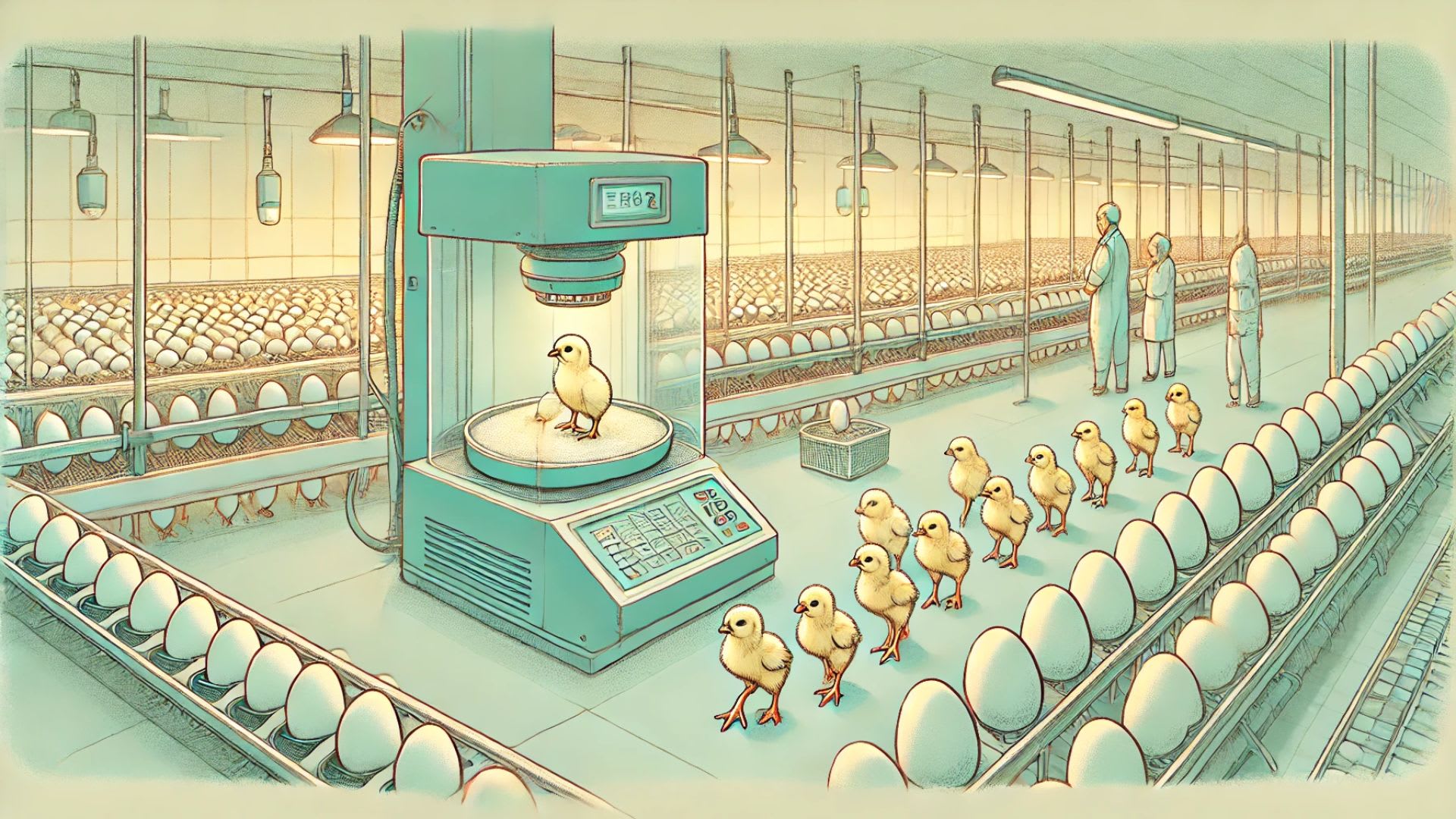
Millions of animals suffer in industrial systems without any reliable way to verify their living conditions. Industrial animal agriculture has expanded rapidly over the past decades, resulting in billions of animals being raised and slaughtered under intensive conditions. These systems prioritize efficiency and cost reduction over animal protection, and while some corporate commitments and legal regulations exist, the enforcement conditions are insufficient which may lead to an insignificant or zero positive impact, and in the worst case, worsen the previous situation. The problem is not only the scale, but the lack of transparency. Many producers do not disclose verifiable information about their practices, making it difficult for NGOs, regulators, journalists, and investors to assess compliance or push for improvements. As a result, even well-designed protection policies may have little to no real-world impact. CENTINELA addresses this gap by focusing on transparency as a key bottleneck. By generating reliable, comparable information on industry practices, the intervention enables external actors to apply informed pressure and drive improvements in animal protection. 👥 Who Will Benefit Primary beneficiaries: Animals raised in industrial farming systems (such as chickens, pigs, cows, and fish) Animals affected by poor welfare practices such as confinement, inadequate handling, and lack of oversight Secondary beneficiaries: Animal protection NGOs (improved access to actionable data) Journalists and media (evidence for public reporting) Regulators and policymakers (better monitoring tools) Investors and corporate stakeholders (improved decision-making) In Latin America: access to reliable information on farm animal welfare is highly limited. Structural barriers include: Weak regulatory enforcement Limited monitoring capacity Low corporate transparency Lack of standardized reporting systems This creates a critical gap: stakeholders cannot verify whether welfare commitments are being implemented in practice. 📊 Metrics Donors Can Understand CENTINELA does not directly change industry practices—it enables change by improving access to information and optimizing impact for existing animal welfare interventions. What this means in practice: More companies publicly evaluated on animal welfare transparency Increased visibility of both action and inaction (including non-response) Stronger evidence for NGOs to prioritize campaigns Greater pressure on companies to improve practices Evidence-backed outcomes: Participants (ecosystem actors such as NGOs) showed: Increased ability to identify high-priority corporate targets Improved access to standardized and comparable data Greater capacity to monitor corporate commitments Higher likelihood of using evidence in advocacy and campaigns 🌍 Why This Matters Improving animal welfare at scale requires more than good intentions—it requires reliable information. Without transparency, even the best policies and commitments risk failing in practice. By investing in CENTINELA, donors support a foundational piece of infrastructure that enables accountability across an entire industry. This approach does not act alone, but strengthens the effectiveness of all other efforts—making it a strategic and potentially high-impact lever for improving the lives of millions of animals.
Raised
$0
Goal
$59,276
Anti Entropy logo
Laboratory of Social Entrepreneurship is hosted at Anti Entropy

Become a supporter!

Donate or start a fundraiser