No Name Foundation's official profile emblem, featuring a luminous central symbol with radiant pink, purple and blue details on a white background.

No Name Foundation

Global emergency and wildlife relief. Local teams help families and animals after floods, wildfires, earthquakes, war and crises.

DonateStart a fundraiser
Quenara Foundation emergency relief banner featuring the original Q emblem, a red global response map, and symbols for floods, wildfires, earthquakes, animal rescue, conflict relief and emergency shelter.
User or nonprofit avatar
Climate Change
User or nonprofit avatar
Humans
User or nonprofit avatar
Justice
User or nonprofit avatar
Education
User or nonprofit avatar
Health
User or nonprofit avatar
Religion
User or nonprofit avatar
Animals
User or nonprofit avatar
Science & Technology

WE RESPOND WHEN LIVES ARE AT RISK

No Name Foundation, publicly known as Quenara Foundation, is a United States 501(c)(3) public charity dedicated to emergency humanitarian relief, disaster response, wildlife rescue and the protection of vulnerable communities. When floods sweep through homes, wildfires destroy habitats, earthquakes displace families or conflict cuts people off from basic necessities, the first question is practical: who needs help, what do they need, and how can it reach them safely? That question guides our work.

Our mission is broader than any single emergency. We respond to threats affecting people, animals and the natural world through our own response teams in different countries and trusted local field partners. Local experience matters. It helps us understand where the damage is greatest, which roads are passable, what is already being provided and who may still be waiting for help. Our emergency readiness model is built around the first critical hours. We aim to activate response coordination within two hours of a qualifying emergency, connecting our incident monitoring with practical decisions and local action.

DISASTER RELIEF AND RAPID EMERGENCY RESPONSE

We focus on urgent needs arising from floods, flash floods, hurricanes, tropical storms, severe weather, wildfires, earthquakes, landslides, winter emergencies, heatwaves and other natural hazards. Immediate priorities may include clean drinking water, food, emergency shelter, hygiene supplies, blankets, clothing, household essentials and assistance for families displaced from their homes. As an incident moves beyond its first hours, needs often shift toward safe cleanup, replacement of essential items, access to local services and early recovery. We adapt to those changes rather than treating every disaster as the same.

WILDLIFE RESCUE, ANIMAL WELFARE AND VETERINARY SUPPORT

Wild animals cannot follow evacuation orders. During wildfires, floods, oil contamination and other environmental emergencies, animals may be burned, injured, dehydrated, displaced or separated from suitable habitat. Our wildlife emergency work is designed to support local response, safe assessment, specialized transport, veterinary treatment, temporary care and rehabilitation through appropriately qualified and authorized professionals. Rescue is not the end of the story. An animal may need days, weeks or months of care before release is possible.

HUMANITARIAN AID IN CONFLICT AND DISPLACEMENT

War and conflict can separate families, interrupt medical care, destroy homes and cut off access to food and safe water. Our humanitarian mission includes emergency assistance for conflict affected civilians, displaced families, refugees and communities facing severe hardship. Depending on access, local conditions and available funding, support may involve food parcels, drinking water, hygiene items, bedding, seasonal supplies and other necessities identified with local partners. We serve on the basis of human need, without requiring people to share a nationality, background or belief. We do not make the safety of recipients or local aid workers secondary to publicity.

FOOD RELIEF, CLEAN WATER AND BASIC NEEDS

Hunger does not wait for a disaster declaration. Families may be pushed into food insecurity by poverty, displacement, extreme weather, unemployment or disrupted supplies. Our food relief approach includes emergency groceries, suitable ready to eat food, support for local meal provision and essential nutrition assistance where justified by circumstances. For communities without dependable clean water, the needs may include bottled water, safe storage, filtration, water delivery or longer term access improvements. We also recognize the importance of sanitation, menstrual hygiene, infant care items and disability appropriate supplies. A useful relief package begins with the person receiving it, not with a generic list printed in advance.

OLDER ADULTS, CHILDREN AND PEOPLE AT GREATER RISK

Every emergency affects people differently. Older adults may live alone or be unable to travel to a distribution point. A family caring for a disabled relative may need different equipment and more time to evacuate. Children can lose access to school, adequate clothing or stable meals. People already living in poverty may not have savings to replace a mattress, pay for temporary accommodation or repair a damaged home. We seek to recognize these differences and prioritize those with urgent unmet needs. Dignity, privacy and careful listening belong in disaster relief just as much as food and water do.

OUR FIELD MODEL: LOCAL PEOPLE, DIRECT ACTION

No Name Foundation combines its own international response capabilities with local partners who understand the communities they serve. We receive incident information, assess severity and urgency, consult available sources, speak with partners, identify feasible assistance and coordinate decisions around safety and verified needs. Local procurement can shorten the time between identifying a need and delivering supplies, while also supporting local businesses when appropriate. In some emergencies the best contribution is a targeted delivery; in others it may be transport, a referral to specialist care, essential equipment or collaboration with a public authority already managing the response.

TECHNOLOGY THAT SUPPORTS BETTER DECISIONS

Alongside field response, our organization develops emergency monitoring, geographical analysis and operational technology intended to help identify events, compare available incident information and prioritize action. We work with information from disaster alerts, mapping and other sources to support timely decisions. Technology cannot replace a field assessment or the judgment of local responders, but it can help us ask the right questions earlier. We pursue science and technology for public good, not as a substitute for human compassion, but as a way to make it more useful when minutes matter.

CURRENT EMERGENCY WORK AND RECENT APPEALS

Our public emergency appeals have included wildlife assistance during the Bouquet and Norte fires in California, flood and landslide relief in Nepal, earthquake related humanitarian assistance in Panama and crisis support for displaced or conflict affected families. We have also developed campaigns responding to flooding, extreme weather and other emergencies in the United States and abroad. Each event has its own urgent needs. We work to translate reliable field information into focused assistance and communicate meaningful progress while respecting the privacy and dignity of the people affected. Our campaigns explain how supporters can help and what relief priorities are being addressed.

The importance of local presence has been especially clear during the October 2026 flooding in Valencia and Alicante, Spain. Our local field partner has been working in affected communities since the first day, with attention to older residents, displaced households, basic water and hygiene needs, food, bedding and safe early recovery. Some families must deal with damaged homes and possessions long after public attention turns elsewhere. Those are the moments when sustained, practical help can matter most.

HOW A DONATION CAN HELP

A donation to No Name Foundation can strengthen our ability to respond to needs such as:

Safe drinking water, food supplies and emergency groceries.
Hygiene kits, diapers, sanitary products and essential household items.
Blankets, clothing, bedding and temporary shelter essentials.
Safe cleanup supplies and early recovery support after flooding.
Wildlife rescue logistics, suitable carriers, veterinary materials and rehabilitation support through qualified local professionals.
Animal food, transport and care supplies for affected companion animals where needed.
Local transport, essential field equipment and delivery coordination.
Practical support for older residents, children, displaced families and people who cannot easily access existing services.

ACCOUNTABILITY AND RESPECT FOR DONORS

We know a gift represents trust. We seek to keep appropriate records of our decisions, partner coordination, purchased supplies and assistance delivered, while safeguarding sensitive personal information. We share field updates and progress where they are available and suitable to publish, with care taken to describe the assistance provided accurately. Safety, local coordination and sound stewardship shape our decisions, so donor support can be directed responsibly to the people, animals and communities who need it.

PARTNER WITH US WHEN HELP CANNOT WAIT

We welcome donors, businesses, foundations, workplace giving programs, employee matching opportunities and individuals who want to stand alongside people and animals during emergencies. Corporate giving can help strengthen locally sourced supply chains, field logistics and specialist animal care. Recurring giving can help build readiness between crises, when preparation is less visible but no less important. Volunteering and professional partnerships can add skills and capacity, provided each opportunity matches the needs and safety requirements of the work.

Support humanitarian emergency relief, disaster response, flood and hurricane relief, wildfire and earthquake relief, wildlife rescue, animal welfare, food security, clean water, refugee assistance and emergency shelter. Every contribution can help turn concern into practical support.

A 501(c)(3) nonprofit, EIN 35-2882867

Fundraisers

Feed fundraiser card link to Panama Earthquake Sea Turtle Aid | Isla Cañas | Oct 9, 2026
No Name Foundation's official profile emblem, featuring a luminous central symbol with radiant pink, purple and blue details on a white background.
Official fundraiser

Panama Earthquake Sea Turtle Aid | Isla Cañas | Oct 9, 2026

PANAMA EARTHQUAKE WILDLIFE EMERGENCY | OCTOBER 9, 2026 SEA TURTLE NESTING FACILITIES HAVE BEEN DAMAGED. COASTAL WILDLIFE AND ANIMALS IN AFFECTED COMMUNITIES NEED SUPPORT. Since the first day of Panama's October 9 earthquake emergency, Quenara Foundation's response team and local field partner have been engaged under difficult conditions. While families face damaged homes and disrupted services, a second emergency affects animals and fragile coastal ecosystems. We are using local knowledge to identify urgent needs and strengthen care for vulnerable animals. More support is needed to reach them responsibly. AT THE HEART OF THIS APPEAL: ISLA CAÑAS, LOS SANTOS Isla Cañas Wildlife Refuge and nearby Playa La Marinera are important sea turtle nesting areas on Panama's Pacific coast. The Ministry of Environment, MiAMBIENTE, reported more than 10,000 protected sea turtle nests across the two sites during September 2026. That figure describes the scale of conservation work before the earthquake, not nests lost during the disaster. These beaches support olive ridley sea turtles (Lepidochelys olivacea) and green sea turtles (Chelonia mydas) . Their protection depends on safe nesting areas, careful monitoring and experienced conservation workers. During nesting season, damaged infrastructure can seriously disrupt the people and facilities responsible for protecting eggs and hatchlings. WHAT THE EARTHQUAKE DAMAGED A local report published on October 12 described serious damage to the Venancio sea turtle incubation facility at Isla Cañas after the earthquake, aftershocks and strong coastal waves. The preliminary assessment reported the loss of the area used to incubate relocated nests and damage affecting approximately 75% of the facilities and structures assessed . Water and septic tanks were reported damaged or collapsed, a container was displaced and flooded access routes made work more difficult. These are preliminary infrastructure findings. They reveal an urgent practical need: conservation teams require safe access, functioning equipment and appropriate incubation facilities. Restoring that capacity calls for technical decisions and assistance that reaches qualified local professionals. PRESENT SINCE THE FIRST DAY Quenara Foundation and our local field partner have been engaged in Panama's emergency response since day one. Damaged roads, interrupted services and difficult transport put pressure on responders. We are identifying conservation and animal welfare priorities, consulting local specialists and seeking practical resources to help address verified needs. At protected nesting sites, conservation and veterinary activities are coordinated with the responsible authorities and trained specialists. Our aim is to strengthen local capacity, not disrupt delicate conservation work. OUR FIRST PRIORITY: SEA TURTLE CONSERVATION RECOVERY We want to support responsible recovery in and around Isla Cañas and other affected nesting environments through authorized local conservation teams. Priority needs may include suitable protective materials, nest monitoring equipment, safe storage, essential maintenance supplies, specialist transport, communication equipment and field logistics. Incubation infrastructure requires a careful site assessment. If authorized experts identify a suitable recovery plan, donations can support appropriate replacement materials and equipment. A temporary or permanent solution should protect the species and follow the direction of the responsible wildlife authorities. Improvised relocation of eggs or handling of nesting turtles by untrained volunteers can do more harm than good. Conservation recovery also means helping local specialists return to safe, sustained operations. Access routes, water systems, working equipment and reliable transport are not glamorous. They are the foundations of effective care. MARINE WILDLIFE AND COASTAL HABITATS Coastal habitats connect sea turtles, seabirds and other marine life. Strong waves, debris and damaged access routes may complicate the careful monitoring and protection these environments require. Our approach begins with assessment. Qualified local specialists can determine whether nesting sites need protection, whether wildlife monitoring should increase and which recovery actions are permitted and useful. Funds can help provide essential materials and logistical support for that work, including species appropriate equipment and specialized veterinary referrals when an animal is actually found in need of treatment. ANIMALS ON LAND NEED ATTENTION TOO The earthquake also affected domestic animals and the people responsible for them. Panama's National Police reported providing veterinary assistance to dogs and cats in affected areas of Veraguas. Among the needs identified were animal food, blankets, carriers, medicines and wound care materials. In an emergency, an animal can lose access to familiar shelter, food or veterinary services just as its human family faces disruption. Some need urgent clinical assessment. Others need clean water, appropriate food, secure transport or a safe temporary place to stay. Local veterinarians and animal welfare partners are essential for determining the right response. Native birds, mammals and reptiles may also need assessment where habitat disruption is reported. Specialist intervention will follow actual cases and local guidance. WHAT YOUR DONATION CAN PROVIDE SEA TURTLE NESTING PROTECTION: Approved protective supplies, nest monitoring materials, suitable conservation equipment and operational support for qualified local teams. INCUBATION FACILITY RECOVERY: Materials or equipment identified through authorized technical assessments for restoring essential conservation capacity. WATER AND FIELD INFRASTRUCTURE: Appropriate storage, sanitation related supplies and replacement of essential items required for safe conservation operations. EMERGENCY VETERINARY CARE: Clinical assessments, wound care materials, hydration treatment, prescribed supplies and referrals to qualified animal care professionals where necessary. ANIMAL FOOD AND TEMPORARY CARE: Species appropriate nutrition, clean water, blankets, safe holding resources and other essential supplies for animals whose needs are confirmed locally. SAFE TRANSPORT: Suitable carriers, protective transport materials, fuel and logistical assistance to connect affected animals with authorized care providers. COASTAL MONITORING: Appropriate field equipment, communication supplies and authorized monitoring activities to protect vulnerable nesting and shoreline environments. LOCAL RESPONSE CAPACITY: Procurement, delivery and practical coordination that help trained responders work safely and use resources where they are most needed. Every activity will be determined by verified field priorities, professional advice, local laws, available funding and safe access. Donations will not automatically be divided equally across categories; they will be directed toward needs that can responsibly be met. WHY RAPID COORDINATION AND SPECIALIST CARE MATTER Our broader emergency model aims to begin coordination in the first two hours of a qualifying incident. Actual field intervention depends on safety, local access and specialist availability. Early coordination helps locate the right people and supplies. OUR TEAM, OUR PARTNERS, OUR COMMITMENT From the first day, our team and local partner have remained engaged in Panama's broader emergency response. We are determined to continue helping as recovery unfolds. That means listening to people on the ground, identifying what is missing, assessing whether we can assist safely and directing available resources toward practical action. We value the trust behind each donation. We aim to keep appropriate records of the supplies and assistance supported and share meaningful updates as reliable field information becomes available, while protecting sensitive information. A donation could help a qualified conservation worker obtain necessary field supplies. It could help replace equipment identified in an approved recovery plan. It could help a veterinarian treat an affected animal, or enable safe transportation to the right provider. These are specific ways to turn concern into useful support. AN URGENT INVITATION TO DONORS AND COMPANIES We welcome individuals, wildlife advocates, animal lovers, marine conservation supporters, charitable foundations, businesses and workplace giving communities. If you are searching for Panama earthquake relief, Isla Cañas sea turtle conservation, marine wildlife protection, emergency animal rescue, veterinary care, coastal habitat recovery or support for animals after natural disasters, this appeal brings those concerns together in one practical mission. Corporate gifts and employee giving can strengthen local purchasing, essential transport and conservation recovery. Our focus is practical support identified with local partners. THE EARTHQUAKE HAS PASSED. THE NEED TO PROTECT ANIMALS AND RESTORE CONSERVATION CAPACITY CONTINUES. Please help Quenara Foundation support the qualified local teams, vulnerable animals and conservation environments affected by this emergency. Alongside our local partner since day one, we are working to extend responsible recovery in Isla Cañas, Los Santos, Veraguas and other affected communities. Thank you for standing with Panama's sea turtles, its coastal habitats and the animals that depend on compassionate care. NO NAME FOUNDATION | QUENARA FOUNDATION United States 501(c)(3) Public Charity | EIN 35 2882867 https://quenarafoundation.com/
Raised
$300
Goal
$25,000
1 supporter
Donate
Feed fundraiser card link to Bouquet Fire Wildlife Rescue | Los Angeles | Oct 3, 2026
No Name Foundation's official profile emblem, featuring a luminous central symbol with radiant pink, purple and blue details on a white background.
Official fundraiser

Bouquet Fire Wildlife Rescue | Los Angeles | Oct 3, 2026

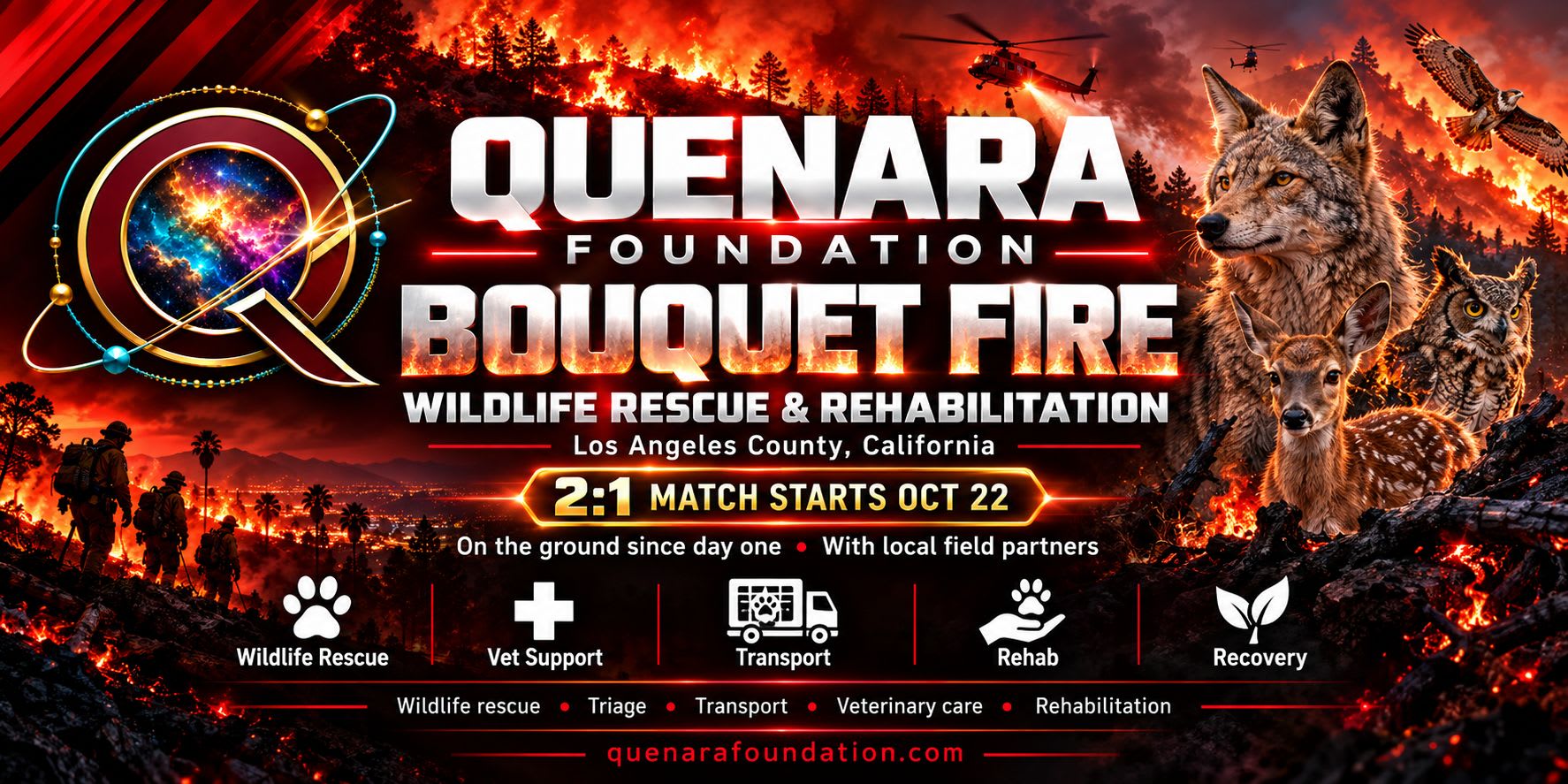
BOUQUET FIRE WILDLIFE RESCUE | LOS ANGELES COUNTY, CALIFORNIA THE FLAMES HAVE BEEN CONTAINED. THE NEED FOR WILDLIFE CARE HAS NOT ENDED. Since the Bouquet Fire began on October 3, 2026, Quenara Foundation's field team and local partners have been on the ground in Los Angeles County, working under difficult conditions to address urgent animal welfare needs. We have not walked away as the fire has subsided. Our team and local partners remain committed to helping animals affected by the emergency, identifying continuing needs and supporting access to appropriate care. But we urgently need additional resources to reach more vulnerable animals and sustain the difficult work that continues after a wildfire. WHAT HAPPENED IN LOS ANGELES COUNTY The Bouquet Fire broke out on October 3 near Bouquet Canyon Road and Quarry Road in the Angeles National Forest, northeast of Santa Clarita, California. The wildfire spread rapidly through dry vegetation, burning 1,048 acres and prompting evacuations in surrounding communities. Firefighters faced challenging terrain and dangerous conditions as they worked to contain the flames. The fire reached full containment on October 13. For wildlife, however, the effects of a wildfire do not necessarily end when firefighters complete their work. Burned vegetation can leave animals without familiar shelter. Smoke and extreme heat can cause injuries and respiratory distress. Animals fleeing a fire may become exhausted, dehydrated or displaced into unfamiliar areas. Some require veterinary attention, while others need careful monitoring and a safe environment in which to recover. These are the animal welfare risks that make continued wildlife response and rehabilitation important. WE HAVE BEEN THERE SINCE THE FIRST DAY Our field team and local partners have been engaged in the Bouquet Fire response since the emergency began. Working in a fire affected environment is demanding. Burned terrain, restricted access, changing conditions and the specialized needs of injured wildlife all create challenges. We are working to identify urgent animal care needs, coordinate appropriate assistance and connect vulnerable animals with qualified professionals when intervention is necessary. Our priority is not simply to respond to an emergency while it dominates the news. It is to help maintain the chain of care that animals may need after the immediate danger has passed. That work requires specialist knowledge, suitable equipment, reliable transportation and continued support. WHAT YOUR DONATION CAN HELP PROVIDE Wildlife rescue and emergency assessment Support for local wildlife assessment, protective field equipment, appropriate animal carriers and the essential supplies used by authorized wildlife response professionals. Emergency veterinary care Professional examinations, diagnostic assessments, wound care supplies, hydration treatment, medically appropriate medication and other necessary veterinary services for injured animals. Safe animal transport Species appropriate transport crates, suitable carriers, vehicle fuel and logistics support to help animals reach qualified care providers when transfer is needed and authorized. Wildlife rehabilitation Assistance for licensed wildlife rehabilitators, temporary specialist care, suitable animal nutrition, recovery supplies, veterinary follow up and preparation for release when appropriate. Water, food and animal care essentials Species appropriate feeding supplies, clean water, veterinary consumables and other materials identified as necessary by qualified wildlife professionals. Protective equipment and local field logistics Gloves, protective clothing, communication supplies, essential field equipment, transportation and other practical resources needed for safe and coordinated response. Continued wildlife recovery Support for appropriate monitoring, specialist rehabilitation and habitat related recovery needs identified through local assessment. Where urgent needs are identified, assistance may also extend to companion animals, horses or livestock affected by evacuation, injury or displacement, provided that support remains consistent with the campaign's charitable purpose. All activities involving wildlife will be coordinated with appropriately qualified and authorized professionals, with attention to animal welfare, public safety and applicable regulations. WHY REHABILITATION MATTERS An animal's survival during a wildfire is only the first part of its story. An injured bird may require professional veterinary treatment and a suitable recovery environment. A small mammal affected by smoke or heat may need assessment, hydration support and specialist care. A displaced animal may require monitoring rather than immediate capture. Moving wildlife without appropriate expertise can cause additional harm. There is no single treatment that suits every species. That is why we believe responsible wildlife emergency response must include professional assessment, appropriate intervention and continued rehabilitation when necessary. HELPING MORE ANIMALS REQUIRES MORE RESOURCES Our team and local partners have continued working since the beginning of this emergency. We know how important it is to have the right supplies available when an urgent need is identified. A suitable transport crate can help an injured animal reach professional care. Veterinary supplies can support appropriate treatment. Fuel and reliable logistics can help connect local responders with rehabilitation resources. Specialist care can continue for weeks after an animal is removed from immediate danger. Every donation contributes to the practical resources behind those efforts. We are asking for your support because we want to reach more animals, strengthen the assistance available and continue responding to needs identified on the ground. A LOCAL RESPONSE SUPPORTED BY A GLOBAL MISSION No Name Foundation, publicly known as Quenara Foundation, is a United States 501(c)(3) public charity working in humanitarian emergency response, animal welfare, wildlife protection and disaster relief. Our approach brings together our own field capabilities, local partners and specialist professionals. We seek to respond quickly, work within local safety requirements, prioritize needs identified through field coordination and direct charitable support toward practical assistance. The Bouquet Fire is one of several emergencies through which we are working to strengthen our wildlife response capabilities. Our commitment extends to the animals affected today and to building better readiness for the emergencies that may come tomorrow. YOUR GENEROSITY CAN HELP US CONTINUE The Bouquet Fire affected more than trees and vegetation. It disrupted a natural environment shared by countless living creatures. We cannot reverse every loss caused by a wildfire. But with the support of compassionate donors, we can strengthen the resources available for responsible animal care and help local professionals address continuing wildlife needs. We welcome support from individuals, animal lovers, businesses, corporate donors, employee giving programs and charitable foundations. If you care about Los Angeles wildfire relief, California wildlife rescue, emergency veterinary treatment, animal rehabilitation, habitat recovery and the protection of animals during disasters, please consider supporting this response. THE FIRE IS CONTAINED. OUR COMMITMENT TO WILDLIFE CONTINUES. Our team and local partners have been engaged since day one. We want to continue helping and expand the support available to animals that need professional care. Please help Quenara Foundation reach more vulnerable animals affected by the Bouquet Fire. Thank you for standing with wildlife and for believing that animals deserve care and protection long after the flames have disappeared. NO NAME FOUNDATION | QUENARA FOUNDATION United States 501(c)(3) Public Charity EIN: 35 2882867 https://quenarafoundation.com/
Raised
$300
Goal
$50,000
1 supporter
Donate

Donors

  • Ceydanur TOSUN
    To the fundraiser: Bouquet Fire Wildlife Rescue | Los Angeles | Oct 3, 2026