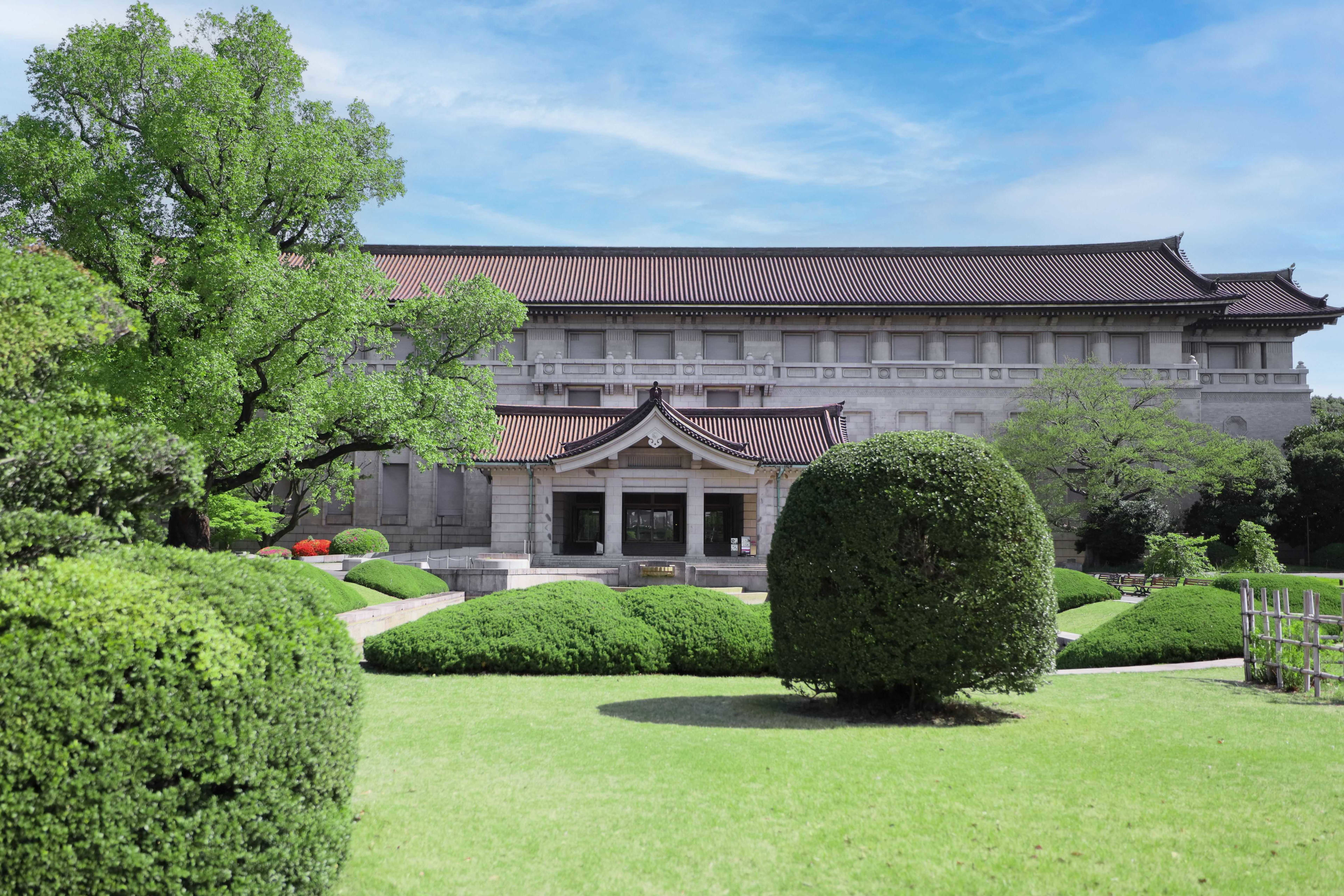



Tokyo National Museum started out as “Ministry of Education Museum” in 1872 when the Ministry of Education Exhibition was held at the Taiseiden Hall of Yushima Seido in Tokyo, Japan.
Established in Tokyo in 1872, Tokyo National Museum (TNM) is the oldest national museum in Japan. It houses the world’s largest collection of Japanese art and artifacts. The collection ranges from paintings and sculptures to ceramics and historical documents, covering most periods and regions of Japan.
In addition to its Japanese treasures, the museum’s extensive galleries feature objects from across Asia and the Middle East. Visitors can also enjoy temporary exhibitions of art and artifacts borrowed from other institutions in Japan, as well as from Europe, the Americas, and other regions of the world.
<History>
TNM started out as “Ministry of Education Museum” in 1872 when the Ministry of Education Exhibition was held at the Taiseiden Hall of Yushima Seido in Tokyo, Japan.
Later in 1888, the ownership of the museum was transferred to the Imperial Household and subsequently changed its name to the Imperial Museum.
In 1947, as the new Constitution came into effect, the Imperial Museum was returned to the state, specifically the Education Ministry.
In 2001, the Tokyo, Kyoto, and Nara National Museums merged into the Independent Administrative Institution of National Museums. Then in 2007, the Institution merged with Tokyo and Nara National Institutes for Cultural Properties to form the National Institutes for Cultural Heritage.
<Now>
The history of TNM is longer than any other museums in Japan as it marked its 150th anniversary in 2022.
Our purpose is to store and manage 120,000 items of tangible cultural heritages of Japan and other Asian regions, including National Treasures and Important Cultural Properties, communicate their characteristics, and pass them on to the future.
Looking forward, TNM will strive to define a sustainable museum management while continuing to collect, manage, research, and display the cultural heritages, which constitute the core activities of the museum.
To uphold this profound responsibility and ensure these treasures are preserved for the next 150 years, we need your partnership. Your donation today will directly support this crucial mission of safeguarding our shared heritage.
(Please note that international donors may be eligible for local tax benefits depending on their country of residence.)

Donors
Amie Nuttall1