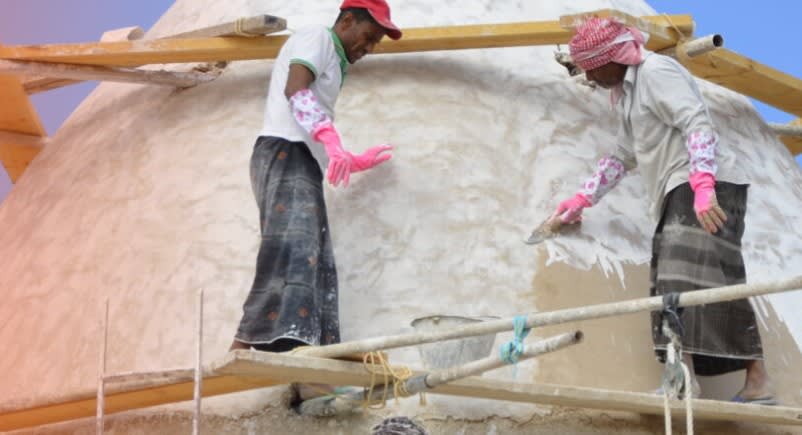




Cultural Emergency Response (CER) was founded in 2003 as a programme of the Prince Claus Fund for Culture and Development and became an independent organisation in 2022. We provide first aid to culture in crisis, working with local partners to protect heritage endangered by conflict or disaster. Our support combines fast emergency funding, decentralised response systems, and capacity building through training and collaboration. Alongside direct action, we advocate for cultural heritage protection as an essential part of humanitarian relief, recovery, and peacebuilding.
Mission and Vision
CER’s mission is to coordinate and support locally-led protection of heritage under threat by providing fast, flexible assistance, strengthening decentralised infrastructures, and building partner capacity through training and expertise. We advocate for cultural rescue as a vital part of humanitarian aid and envision a world where all heritage communities can safeguard their culture in times of crisis. Our Network of CER Regional Hubs advances this approach by developing regional response mechanisms, strengthening networks of experts and institutions, and sharing knowledge, resources, and tools. They also engage international heritage stakeholders at a regional level to enhance collaboration and coordination in heritage protection.
Since our establishment as an autonomous entity in 2022, we have delivered 101 projects in 30 countries (2022-2024) and launched two new CER Regional Hubs in both the Black Sea and the Caribbean regions. Our projects are worldwide, from rescuing historic buildings after the Beirut explosion to safeguarding museum collections in Afghanistan and digitising manuscripts in Ecuador – demonstrating the role of cultural heritage in resilience and community well-being.
Strategic Priorities (2025–2028)
To achieve our goals, CER has defined three strategic priorities, supported by a cross-cutting commitment to sustainable growth:
First Aid to Cultural Heritage
- We provide rapid emergency grants (€15,000–€35,000) and technical expertise to stabilise sites, collections, and practices at risk. Our 24/7 scouting team monitors global crises, and through a network of experts in 82 countries and five Regional Hubs, we can mobilise support quickly.
Decentralised Response Systems
- By building Regional Hubs hosted by local organisations, we enable communities to coordinate heritage protection in vulnerable regions. These hubs strengthen local leadership, networks, and response capacity.
Collaborative Impact
We foster cross-sector partnerships and advocate for cultural heritage protection as a critical part of humanitarian response.
Foundational Priority: Sustainable Growth
As a newly independent organisation with two decades of experience, CER is investing in internal capacity and funding structures to expand its impact and ensure long-term effectiveness. CER is also beginning the creation of an emergency fund, the Culture in Crisis Fund. This fund is a ready-to-activate operational and financial mechanism for urgent cultural interventions, designed to close the critical gap in emergency funding. It enables rapid deployment of resources before damage becomes irreversible, while strengthening long-term capacity to protect heritage. By bringing together contributions from the private sector, foundations, governments, and individual donors, the Fund ensures immediate, coordinated, and high-impact responses, supporting heritage communities in moments of acute crisis and building resilience for the future.
Key Activities (2025–2028)
Emergency Projects: About 15 projects per year, protecting around 45 sites and collections, coordinated locally where possible through Regional Hubs.
Culture in Crisis Fund: A new pooled emergency fund to enable rapid, large-scale responses and strengthen long-term capacity.
Network Expansion: Building presence through the establishment of two new Regional Hubs in South Asia and in West or Sub-Saharan Africa.
Documentary Heritage: Dedicated support for archives and manuscripts, often overlooked in preservation efforts.
Large-Scale Crisis Responses: Continued Action Plans in regions such as Ukraine and Palestine, supported by targeted fundraising.
International Action Plans: At least one coordinated plan per year with pooled donor support and Regional Hub leadership.
Professionalising Response: Refining workflows, criteria, and standard operating procedures for faster, more effective action.
Strategic Partner Mapping: Identifying partners to strengthen collaboration in monitoring, training, and response.
Planned Impact (2025–2028)
Our work goes beyond safeguarding objects and sites: it sustains identity, resilience, and recovery. Over the next three years we aim to:
Equip local leaders with resources and expertise to preserve cultural heritage for future generations.
Strengthen social cohesion by ensuring cultural continuity.
Safeguard knowledge, memory, and practices that enrich societies.
Conclusion
CER’s work is not just about saving heritage – it is about preserving the foundations of identity, belonging, memory, and resilience in the world’s most vulnerable communities. Through rapid response, decentralised systems, and strong partnerships, CER aims to scale its impact and lead a global movement toward inclusive and sustainable cultural heritage protection.

Become a supporter!
Donate or start a fundraiser