“Controlling Nearly All Cancers with NEXT Breakthroughs.”
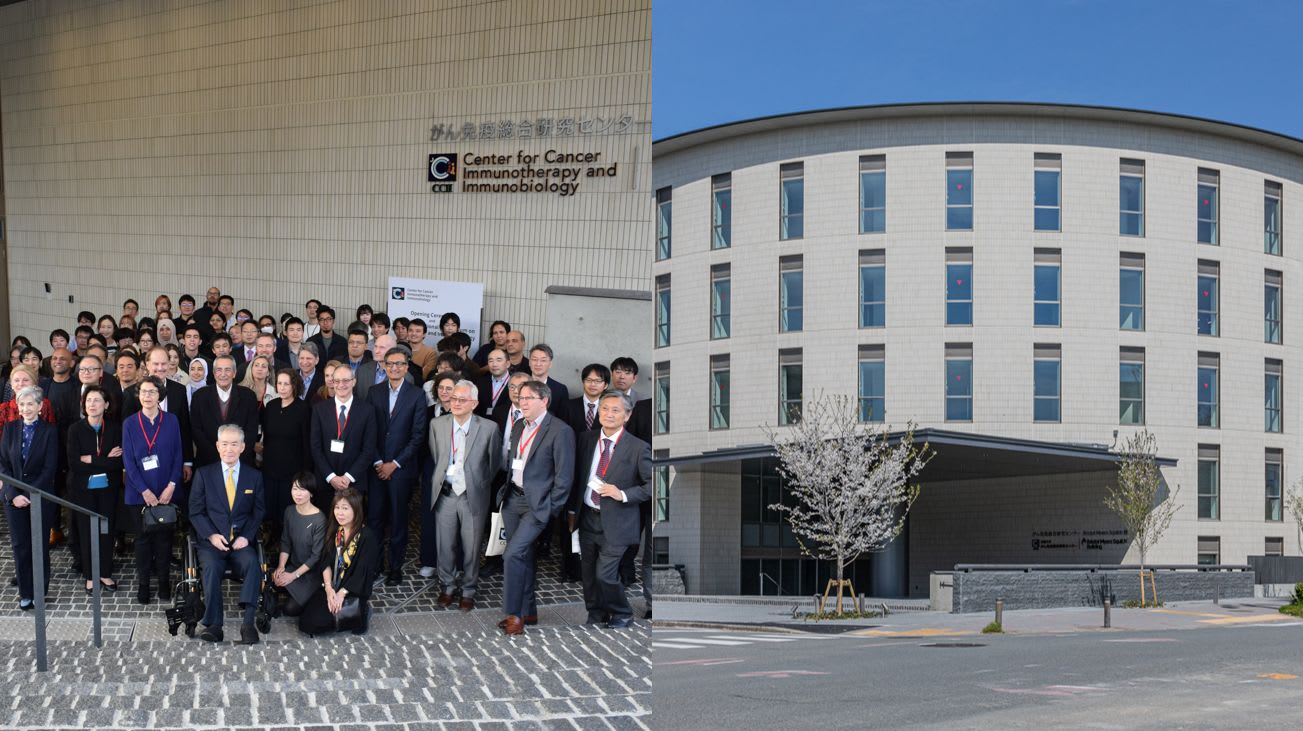
The Center for Cancer Immunotherapy and Immunology (CCII) at Kyoto University Graduate School of Medicine was established in April 2020 under the clear vision of “making most cancers controllable by immunotherapy by 2050” by Professor Tasuku Honjo, recipient of the 2018 Nobel Prize in Physiology or Medicine. Cancer immunotherapy using PD-1 antibodies began in 2014 with the approval of Opdivo, Keytruda. Initially recognized only for a very limited number of cancer types, its application has since expanded significantly. Today, it plays a role as an important treatment option for over 20 types of cancer (including some skin cancers, most lung cancers, kidney cancer, some blood cancers, stomach cancer, pharyngeal cancer, many head and neck cancers, bladder cancer, renal pelvis cancer, certain mesotheliomas, esophageal cancer, and cancers of unknown primary origin). Immunotherapy using PD-1 antibodies is a revolutionary treatment capable of curing patients who did not respond to conventional therapies such as surgical resection, chemotherapy (administration of anticancer drugs), or radiation therapy (irradiation with X-rays, etc.). It is now a cornerstone of cancer treatment. This immunotherapy harnesses and maximizes the body's own immune function, specifically T cells, enabling patients to fight cancer using their inherent resistance. Because it places less burden on the patient's body, especially in early stages, there is no need for dramatic changes to their previous life or lifestyle. It is cancer treatment that supports “living life as oneself.” In recent cancer treatment, options combining this immunotherapy as the mainstay with conventional surgical treatment, chemotherapy, and radiation therapy are increasing. While PD-1 antibody therapy has achieved remarkable results worldwide, it still faces the challenge that over half of patients do not respond sufficiently. At CCII, we aim to overcome this issue by elucidating the mechanisms cancer cells use to evade immune attacks, striving to realize high-quality cancer immunotherapy that delivers tangible benefits for everyone. To this end, we have established an integrated framework advancing research from fundamental molecular-level studies to clinical applications, driving comprehensive research efforts. Donations will play an increasingly vital role in funding CCII's research. By donating to CCII, you directly contribute to both foundational and applied research aimed at developing the next revolutionary cancer immunotherapy. Your support sustains this challenge to realize humanity's shared dream of conquering cancer. Join CCII in building hope for 2050. How we utilize your gift
・Development of the next revolutionary cancer immunotherapy drug
・Securing outstanding researchers and research support personnel
・Establishing a world-leading research environment
・Expanding research support systems, improving research environments, and enhancing information dissemination and outreach activities